
.svg)
In a pharmaceutical company subject to ISO audits, procedure training carries real compliance weight. Training delivered and training genuinely absorbed are two different things.
A one-hour Teams meeting with cameras off and everyone multitasking may count as the former, but it rarely achieves the latter. In a quality management system, that gap can surface at the worst possible moment: during an audit.
The Problem: one-hour meetings with cameras off, no audit trail, and an IT team with no e-learning skills
The client is a multinational in the pharmaceutical and diagnostic imaging industry, with over 4,000 employees.
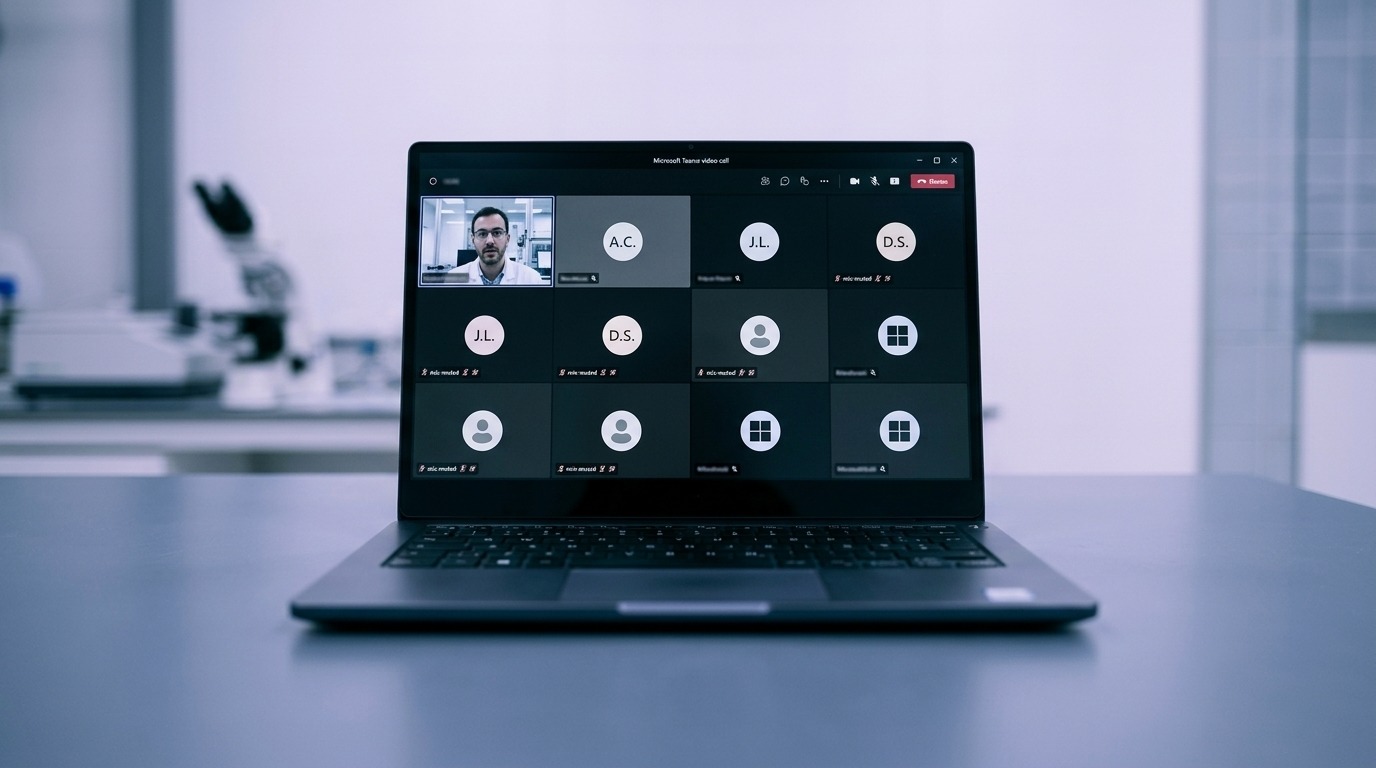
Before Microlearning365, procedure training followed a model that many structured organisations will recognise: scheduled Teams meetings, one hour long, with a trainer walking through the update while attendees sat on the other side of the screen.
In theory, training happened. In practice, cameras were off.
People were multitasking, checking emails, working on other tasks, responding to chats in the background. The message arrived partially, or not at all.
In a pharmaceutical context, the consequences of this gap extend beyond inefficiency:
- Non-compliance risk: an employee who has not genuinely absorbed an updated procedure and applies the old one can generate an operational error, or a non-conformity flagged during an ISO audit. In an industry where quality standards are monitored externally, that is not a theoretical risk.
- Weak audit trail: a signature on an attendance sheet certifies presence, not learning. In a serious ISO audit, that distinction matters significantly. The organisation could demonstrate that people attended, but not that they understood or retained the content.
- Hidden cost of the synchronous model: every training meeting blocks the trainer's time and all participants' time simultaneously. Multiplied by the frequency of regulatory updates and the number of people involved, the operational burden accumulates in ways that rarely get measured but are very real.
The IT team faced a parallel problem: it needed to train colleagues on new internal solutions and procedures, but nobody on the team had instructional design skills.
The alternative to meetings was relying on external vendors, which meant slow turnaround, high costs, and content inevitably distant from the technical subject matter that only IT truly understands.
Our Solution: one IT person starts alone, the Quality team follows, the meetings stop
The journey started with a single experiment, launched independently by one person on the IT team with no prior e-learning experience and no instructional design background.
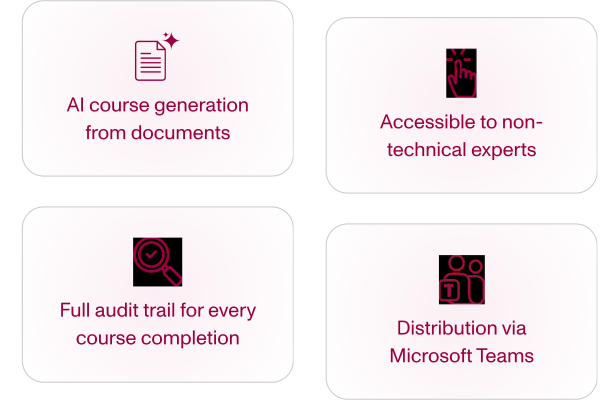
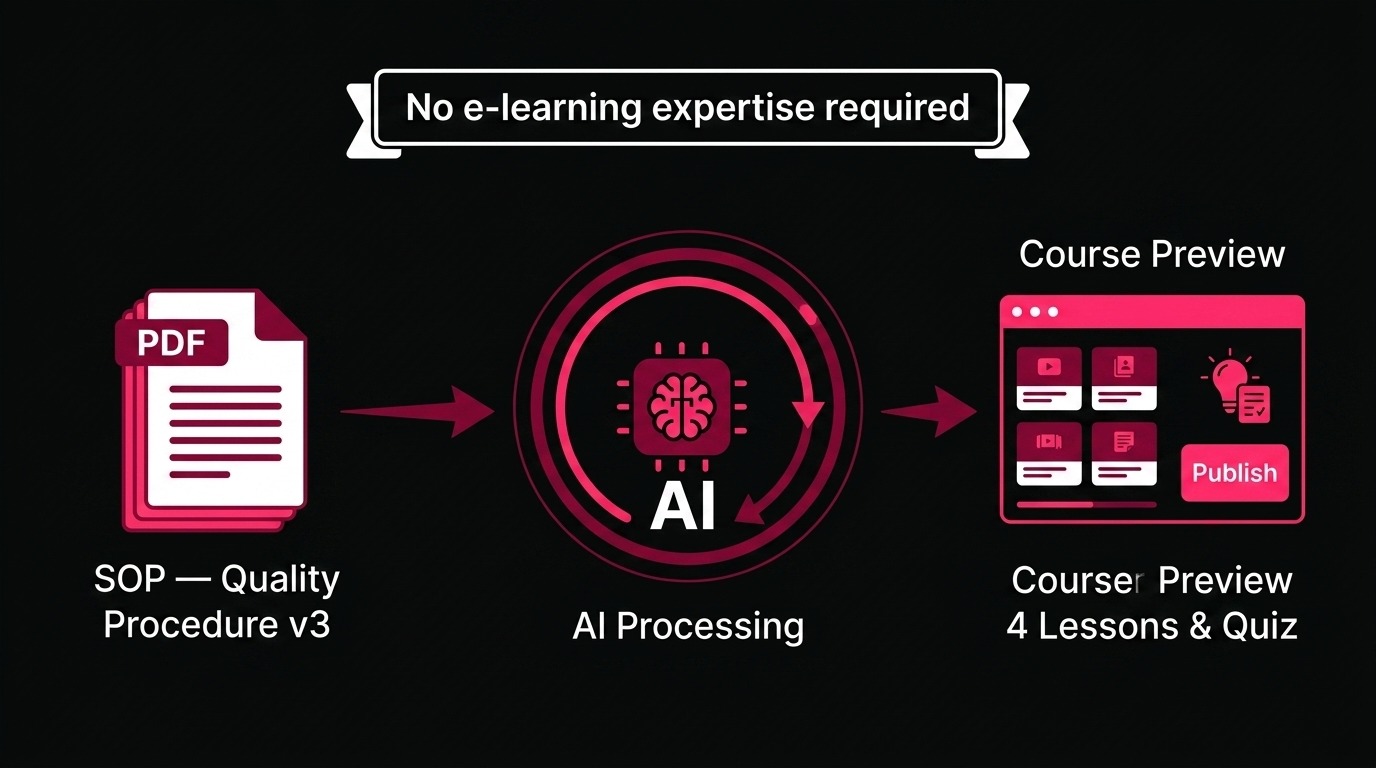
Existing technical documents, including internal procedures, manuals, and materials the IT team already produced for internal use, were uploaded to Microlearning365. The AI turned them into structured courses with short lessons, verification quizzes, and multimedia content, all calibrated to what the source document actually covered.
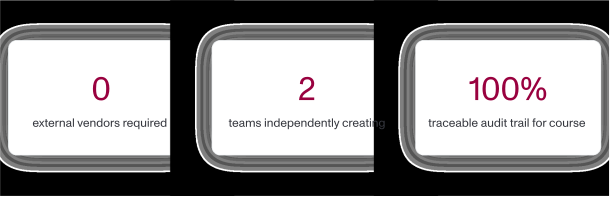
The person creating the content needed subject matter expertise, not e-learning skills. No external vendors were involved, and no waiting was required. Anyone with knowledge of the subject matter, whether in IT, Quality, or HR, can become a course author without going through specialist training or external agencies.
The course was built internally, by the person who understood the content best, using a tool that handled the structure automatically.
Colleagues completed the courses because they took minutes rather than an hour, and because they could follow them at a time that suited their schedule, not during a calendar block someone else had chosen for them.
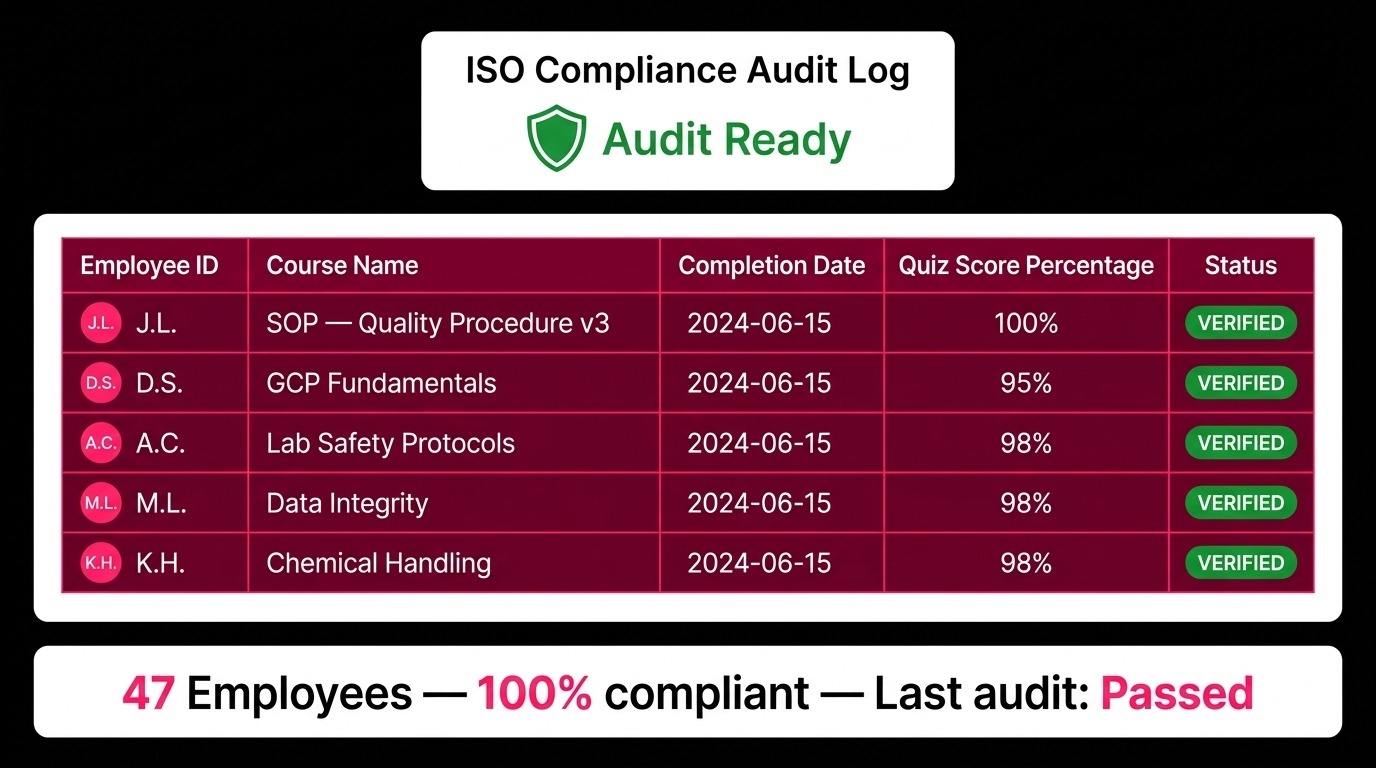
When procedures changed, the IT team member updated the course directly. Every login, every completion, and every quiz result was recorded automatically, creating a verifiable audit trail that a signature on an attendance sheet could never provide.
From that initial experiment, the extension to the Quality team followed naturally.
The Quality team faced exactly the same problem, with the added pressure of ISO audits. Our Microlearning365's specialists are now supporting the Quality team in adopting the tool and designing its course content, passing on the same skills the IT person had acquired independently. The transition from external dependency to internal capability is being replicated across a second department, with the same results and the same logic.
The outcome is a model that has made procedure training asynchronous, traceable, and producible by the people who know the subject, without routing everything through an intermediary.
Results: time recovered, real completion, and a verifiable audit trail for every ISO inspection
The impact of the model shift is measurable across three dimensions, each of which addresses one of the original failure points of the meeting-based approach.
- Time recovered: every hour of training meeting, multiplied by the number of participants, is time taken away from actual work. With async courses, the time spent is the time it takes to follow the lesson, nothing more. There is no preparation time for the trainer, no coordination overhead, no fifteen minutes at the start waiting for everyone to join. For a team that runs training sessions across multiple departments on a recurring basis, that difference compounds quickly.
- Real instructional effectiveness: people omplete the courses because the lessons are short, self-paced, and available at a moment of their choosing. They are not sitting in a meeting room, or a video call, half-present and half-occupied with something else. When they open a lesson, they are doing it deliberately, which means the content actually lands.
- Verifiable compliance: every completion is tracked, timestamped, and associated with a specific user. For a company subject to ISO audits, the difference between a verifiable digital record and a name on an attendance sheet is the difference between confident and uncertain in front of an inspector. The audit trail exists because the platform generates it automatically, not because someone remembered to collect signatures at the end of a meeting.

What's Next?
The model started by IT and expanding to Quality is set to roll out progressively to other departments with recurring mandatory training needs.
Every team that adopts the tool adds to a distributed internal capability that the organisation owns and controls. Training production stops being a project that gets managed case by case and becomes a standard operational function, available to any department that needs it.
📌 The classic meeting can create a problem for the company. With async courses, people actually complete them, and every completion is tracked.
Still have corporate training on your to-do list? Book a demo and discover how Microlearning365 turns your internal documents into professional courses in minutes.


.svg)
.svg)
.svg)